Holiday Niseko Blog
Outdoors the Holiday Niseko Way-
Hokkaido Snow
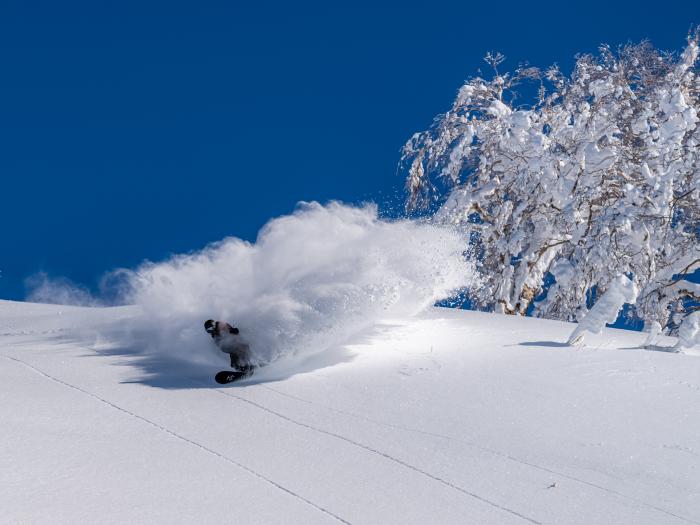
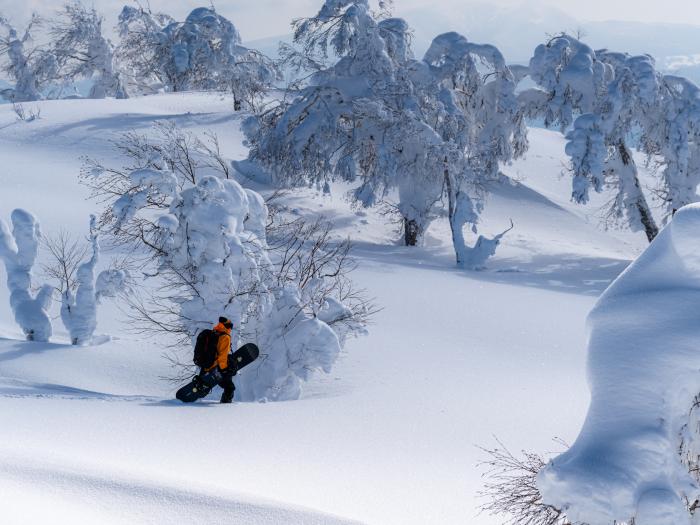
Posted on November 5th, 2009 No commentsMany of our guests are quite surprised to know that Ashley and I have spent over 11 years in Hokkaido and that we have also been friends since our snowboarding days in New Zealand. What brought us here and kept us here so long? Our common interest in snowboarding and Hokkaido’s famous powder snow of course.
With winter rapidly approaching here is a taste of what to expect - (see if you can spot Ashley)
Thanks to our good friends Johnny Samoa, Clayton at Black Diamond Lodge, The Sapporo Snakes, NisekoSnow.net and also Gung Ho! Recordings for the sounds on the video.
-
Countdown to winter
Posted on November 5th, 2009 No commentsThe 30cm snowfall that blanketed the village earlier this week is a sharp reminder the 09/10 ski season is only 3 weeks away. Many people have taken advantage of our early bird discounts this season and the key dates around Christmas and New Years are starting to fill up. If you are planning to ski Japan this winter and haven’t organized your Niseko Hirafu accommodation yet I would recommend doing so soon.
In winter many guests staying in our Hirafu apartments often ask what Niseko looks like without the snow. And the answer goes like this…

Moiwa Ski Area. Under new ownership this year.

Autumn colours in Hanazono

Weiss ski area Niseko. Snow cat skiing in winter, hiking in summer.

Otaru city. A popular day trip from Niseko

The peak of Mt Annupuri from Goshiki onsen.

Niseko backcountry without the snow.
-
Niseko Autumn
Posted on October 15th, 2009 No commentsIn October many Japanese people love to travel into the mountains and countryside to see “Kouyou” (Autumn colours). The mountain roads and hot springs around Niseko become quite busy in the weekends during this period. For those without a car, Japan Rail puts on a special kouyou steam locomotive that runs from Otaru and through the Niseko area.

Autumn in Niseko
If you are lucky enough to live in Niseko you only have to look out your window to appreciate the Autumn colours.

Just outside the window
TV weather reports track the best dates for kouyou throughout Japan. The kouyou season kicks off around late-September in central Hokkaido and ends early December on the southern island of Kyuushu. It is possible to catch the Autumn colours around Kyoto and then fly to Niseko and enjoy the early season snow.

Autumn Snow on Mt Yotei
Talking of snow, the first snow of the season has already fallen on Mt Yotei and opening day for the Niseko Ski Resort is less than 6 weeks away.
With winter so close the blog will be taking a hiatus as we prepare for the upcoming winter. Hopefully I will be able to post a few winter pictures during the season (Of the 11 winters I have done in Hokkaido, I unfortunately have very few photos so don’t hold your breath).

Not long now.....
-
Run from the hills, run for your lives
Posted on September 18th, 2009 No commentsThere are currently 108 active volcanoes in Japan (ten percent of the world’s total). On average eruptions or abnormal phenomena are observed at 10 volcanoes a year in Japan. In Japan an active volcano is defined as “volcanoes which have erupted within 10,000 years or volcanoes with vigorous volcanic gas and water vapor releases.” In Hokkaido 19 volcanoes fit that description and there have been 16 large-scale eruptions in the last 350 years (3 were of an equal scale to the 1980 Mt Saint Helens eruption). Closest to home is the Niseko volcanic group, which includes Nisekoannupuri (yes, you are skiing on an active volcano), Mt Yotei and Usu-zan.

Usu-zan erupts
Although classed as active, the Niseko group and Mt Yotei are at the bottom of the activity scale. Usu-zan however is right at the top. Situated on the shores of Lake Toya 50km south of Hirafu, Usu-zan is one of Hokkaido’s well-known volcanoes and one of the most active in Japan. There have been four eruptions in the last 100 years alone with the most recent taking place in 2000.

I wouldn't park in this neighbourhood
The March 2000 eruption created 50 new craters, caused mudflows, destroyed a national road, several buildings and forced the evacuation of over 13,000 residents from the surrounding area. While most were able to return to their homes within two weeks, 3,000 people from the Toyako Onsen township had to wait for more than 2 months in evacuation shelters before they could return.

I hope they had insurance
Lake Toya is a popular stop on the domestic tourist trail. Highlights include onsen, a ropeway on Mount Usu and Showashinzan (a small lava dome that was created between 1944 and 1945). When Usu-zan erupted in 1977, visitor numbers to the area dropped by 60%. To revitalize tourism following the 1977 eruption the local community started a spring to autumn nightly fireworks display on the lake. This has been running since 1982 and has become a successful draw card to the area. Following the most recent eruption the local community decided to preserve the ruins and the area is now part of the Lake Toya and Usu Volcano Geopark.

Epi-center of the 2000 eruption
I saw the 2000 eruption on local TV. It was major news on all stations. Plenty of live action from helicopters flying over the exploding craters and lots of expert opinions on the size of the boulders being hurled skywards. The township was closed, covered in ash and the local business leaders being interviewed looked mightily depressed.

Showashinzan a popular tourist spot
The Lake Toya economy is heavily dependent on tourism and the eruption at the start of spring threatened the whole summer trade. In a desperate measure to declare the town safe again and generate business one of the major hotels offered a 5000jpy stay with buffet dinner and breakfast included. Lake Toya is one of my favourite places in Hokkaido so I jumped at the offer. With half the town closed and the mountain still fizzing I went down for the weekend to enjoy the onsen and buffet. The thing I remember the most about that weekend was finding a hard-hat and an evacuation map in my room. Errrr I thought this place was safe and I’m not quite sure how effective the hat is going to be at stopping those 3 tonne boulders I’d seen the experts talking about.

Mt Yotei from Usu-zan

Road block ahead
-
Mt Yu-tee You beauty!
Posted on September 11th, 2009 No comments羊蹄山Youtei-zan (pronounced Yoo-tay and not you-tie or ute-tee) dominates the surrounding Hirafu-Niseko skyline. Mt Yotei is one of the 100 famous mountains in Japan and the name can be translated as sheep’s foot. Standing 1898m tall, Mt Yotei is also known as Shiribeshi-yama, Makkarinupuri and Ezo Fuji (Hokkaido Fuji). Mt Yotei is an active stratovolcano less than 100,000 years old.

An active volcano in your backyard
Stratovolcanoes are typically tall, conical with a steep profile and known for their explosive eruptions. The most recent eruption from the crater of Mt Yotei happened around 5-6 thousand years ago, while around 3,000 years ago a lower eruption on the Hirafu side created the caldera Hangetsu-ko (Half Moon Lake).

Caldera is Spanish for cauldron- Hangetsuko
There are four different hiking routes to get to the summit and the hike will take around 6-8 hours. It is a popular hike but it is steep and requires a decent level of fitness. I discovered the hard way that the trail can be quite slippery after any rain. Mt Yotei is part of the Shikotsu-Toya National Park and numerous varieties of alpine flora and fauna can be seen during the hike. From the top there are great views of the Pacific Ocean, the Sea of Japan and of course the Niseko ski resort area.

A "tricky" steep section - Mt Yotei

Hirafu and Niseko Ski Resort
If you plan on hiking from the Makkari side or Kyogoku side you can stock up on some of the fresh spring water before setting off. I have climbed from the Hirafu side and the hike took a total of 6 hours. The steep descent was quite painful on the knees so I would recommend taking hiking poles and also try to get more than 3 hours sleep the night before you attempt the hike. Unfortunately the clouds came in so our view from the top was non-existent.

Mt Yotei summit err Derek did you check the tenki?
For those who do not live in the Niseko ski resort area you can keep an eye out for any possible volcanic activity with the Kutchan Mt Yotei webcam
-
As high as a kite in Annupuri
Posted on September 5th, 2009 No commentsIf you are driving near the Annupuri ski resort around dawn or dusk during the summer months you may have noticed a strange yellow object in the sky. It is the Niseko Balloon and recently I got the chance to check it out.
I headed out to the Niseko Annupuri Ski Resort at 4pm as I wanted to see the whole process of setting up a hot air balloon.

Step 1: Lay out the balloon

Step 2: Use a big fan to fill the balloon

Step 3: Stand inside the balloon

Step 4: Turn up the heat to max

Step 5: Keep heating until the balloon rises

Step 6: Yatta! & don't forget to tie down
Interesting but obvious fact: The temperature of the air at the top of the balloon is around 100 degrees Celsius.
The Niseko Balloon operates mornings and evenings from June 1st to October 12th weather permitting. The balloon is tethered so you won’t accidentally fly away and will take you to a height of 30m providing great views of the surrounding area.

Packing up. All good things come to an end
A big thanks to the great Niseko Balloon staff (I owe you a beer)
-
Over before it began
Posted on August 29th, 2009 1 commentIn winter many international guests often ask us what we do over the summer months. “Do we remain open?” and “Who visits Niseko in summer?” are also common questions. Yes, we do stay open, and we are kept relatively busy providing accommodation for the domestic market.

Hokkaido's Nature is a big tourist drawcard.
A study by the Japan External Trade Organization estimated the annual number of tourists in Hokkaido is around 50 million. Of which 87% are from within Hokkaido while the remaining 13% (6.5 million) come from outside Hokkaido. Summer is by far the most popular season for tourists from outside Hokkaido with roughly 2 and a half times as many visitors than winter.

Hokkaido drivers average 10 km/h faster than the rest of Japan. It's easy to see why.
The majority of tourists visiting Hokkaido in summer typically stay for 2 or 3 nights. Family tours account for 60% of the visitors and 80% of visitors in summer used private cars for transportation. Hokkaido is well known in Japan for its wide uncrowded roads and fast speeds at which the locals drive. On the flip-side Hokkaido sadly has one of the highest road fatality rates in Japan.

A common summer sight, school bus groups
The Niseko area is very popular with school trips and college sports teams during the summer months. Over 190 schools visit the area, with rafting high on the priority list of things to do. In Hirafu it is not uncommon to see sports teams jogging around the streets as part of their summer sports camp.

Niseko Yukon Apartments & BBQ area
Holiday Niseko remains open over summer with the Yukon apartments being a popular place to stay as the guests have free use of the outdoor barbecue area. Although we do get some foreign guests over the summer, most are unsurprisingly Japanese family groups traveling by private car.

Throw another ebi on the barbie!
What is the most common question we get asked in summer?
“Where can I find Kabutomushi?” (Japanese rhinoceros beetle and the most popular insect in Japan. Many Japanese children will buy or catch these and stag beetles to keep as pets.)

How did you guess I was a big beetles fan?
-
Doing the Maccarina
Posted on August 24th, 2009 No commentsThe fastest way to the Rusutsu ski area from the Niseko resort area will take you through the small village of Makkari. The Makkari area gained some exposure recently when the wives of the G8 leaders visited the village and had lunch at the French influenced Restaurant Maccarina.

Makkari Yotei View

The view back towards Niseko
On the outskirts of the village is the Makkari Snowmobile Land. Set on a sprawling farm the snowmobile tours are definitely worth trying during the winter. I have done these several times and thoroughly recommend the experience. In summer however, there isn’t much here except a Mt Yotei viewing platform and a couple of stalls selling local produce.

Forest trail snowmobiling

Giving it the full throttle treatment
Heading back to Makkari the other main attraction is the Flower Center. The Flower center was recently converted into a Michi no eki (road station) It consists of a large glass house where flowers are grown and sold. There is also a center building selling local souvenirs and interestingly it also houses a mini museum dedicated to Makkari’s most famous offspring, Takashi Hosokawa.

Makkari Flower Center

Takashi Hosokawa in all his glory
Takashi Hosokawa is one of the most popular enka singers in Japan. Modern enka are Japanese ballads that typically deal with themes of love and loss, loneliness, hardships and death. A Japanese blues almost. On a historical note, enka were originally political speeches set to music spread by political activists and dissidents during the late 19th century. Enka were sung as a legal loophole during a crackdown by the government on public speeches of dissent.
Takashi Hosokawa hit it big in 1975 and has won numerous awards for his crooning. Takashi has always promoted his hometown and as a token of their gratitude local Makkari residents built a bronze statue of Takashi. A collection of Takashi’s awards, costumes and memorabilia are on display in the main building.

The main drag Makkari
-
Kutchan Culture Shock
Posted on July 30th, 2009 1 commentOften in winter I get asked by guests who stay in our Niseko apartments, “Is there anything to do in Kutchan? Or “Is there anything to do that isn’t skiing or snow related?” Choices in winter are usually pretty limited so I set out to find something to do in case the ski lifts are closed due to bad weather.
While the primary reason to stay in Niseko during winter is for the skiing, people also travel for the cultural experience. Using culture as a loose theme here I decided to visit the Kutchan Natural History Museum and also the Shu Ogawara Museum of Art to see what was on offer.

Shu Ogawara Museum of Art
Driving to the north east corner of Kutchan you can conveniently find both museums at the opposite ends of a large carpark. The grounds are actually quite beautiful and there are several picnic chairs and tables making it an ideal location for a summer picnic.

Ideal picnic spot in the museum grounds
I headed to the Shu Ogawara Museum of Art first as the 500 yen entrance ticket includes free entry to the Natural History Museum.
The museum was constructed in the memory of locally born artist Shu Ogawara (1911-2002) Although Ogawara was suspended indefinitely from high school he studied hard under the guidance of a young fine arts teacher and was later able to enter the Western painting Department of Tokyo Art School in 1930.
At the museum there are two display halls and a small room where a 20 minute introductory movie showing scenes from around Kutchan, Tibet, China and India that became themes for Ogawara’s paintings.

The main exhibition room
The main display room features around 35 pieces dating from 1933 till 1990 of Ogawara’s work. Interestingly Ogawara abandoned surrealism in 1941 to document air battles for the Japanese Imperial Army. These paintings however are not on display and remain locked in the national archives as the government is currently reluctant to exhibit wartime art.
The second display room is where different exhibitions are held. The museum also holds an outdoor sculpture exhibition every autumn.

Lucky to find a park, Kutchan Natural History Museum
At the other end of the carpark is the Kutchan Natural History Museum. It boasts an odd mix of displays and stuffed animals and dead insects. Unfortunately there are very few English explanations, but it is Japan after all. There were a couple of interesting displays, the old ski equipment and Olympic gold medal from the 30s (which I am surprised hasn’t been stolen yet), the giant aerial photo of the surrounding district which you are allowed to walk over it and finally the remains of a zero fighter plane wing from Mt Annupuri.

Mt Annupuri wartime testing area
During the war, the peak of Mt Annupuri was used as a testing area for fighter plane wing design, or more specifically to test the affects of freezing on wing design. If you climb to the peak of Mt Annupuri you can still see the mounting base for the plane.

Inside the Kutchan Natural History Museum
Overall the Shu Ogawara Museum of Art is excellent and well worth the visit if you like or even semi like art. It’s a modern gallery set in beautiful grounds and would not be out of place in any major city. The staff was very friendly and even offered me some green tea. I ‘m quite surprised (even shocked) this place exists in Kutchan. The Natural History Museum, well what can I say, at least it was free and there was also free tea for visitors so you can’t complain if it’s free.

Whoops, I almost flattened some Niseko luxury apartments
If you are looking to escape the summer rain or the Hirafu lifts are closed for the day in winter, visit the local museums and expose yourself to a bit of culture Kutchan style.
-
Camping at Lake Toya and Shikotsu
Posted on July 28th, 2009 No commentsLake Shikotsu and Toya are both within 1 hours drive from Niseko. They are spectacular caldera lakes surrounded by rugged mountain peaks. Around the lake shores are various inexpensive campsites and onsens (hotsprings). If you have the time we thoroughly recommend getting out of your Niseko accommodation for a night or two and go camping at either lake.
During mid-Summer most campsites are busy in the weekends, though reservations are generally not needed. Weekdays are a lot less crowded so if you like a bit of serenity this is the time to go.

Lake Toya Takarada camp site
Lake Toya is a more developed area than Shikotsu. It takes 40-50 minutes to get there from Niseko. On Toya’s south east side are several large hotels as well as Volcanic Mt.Usu which closed down the area when it erupted in 2000. Toya hosted the G8 summit last year at the exclusive 5 star Windsor hotel.
In July and August there is a fireworks display every night that can be seen from all sides of the Lake.
Toya's Cho Koen (Small park) campsite
Shikotsu is the lake situated along the route between Chitose airport and Niseko. It’s the second deepest lake in Japan maxing out at 360 meters and the northernmost Lake that doesn’t freeze over. Incredibly clear pristine water.

The kids at Shikotsu Morappu campsite
There are no supermarkets or convenience stores nearby so bring a stocked up chilly bin.

Lake Shikotsu on a summer day
Here is a list of campsites we recommend:
Lake Shikotsu:Morappu. The most historical campsite in the park. The largest lake shore campsite and well-equipped.
Bifue. A site for RV’s located in the woods on the lakeshore.
Poropinai and Okatan. Located on the north side of the lake, less busy than the above two campsites
Lake Toya area
Takarada. Area for RV’s, log cabins. Modern and well equipped.
Nakatoya, Takinoue. Located in the trees facing the east lakeshore
Tsukiura: Area for RV’s